QFilter-II
Compact Cryogenic Low-Pass Filter
Achieving the lowest possible noise and electron temperature in quantum circuits
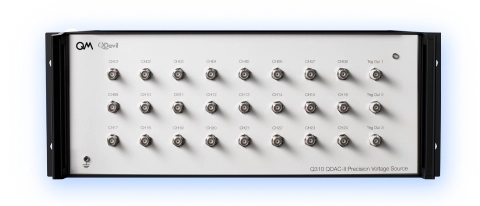
QFilter-II is your compact solution for advanced multi-stage low-pass filtering. It’s specifically designed to reject noise and maintain millikelvin electron temperatures across 24 signal lines. This makes it an ideal fit for your quantum electronics devices and other sensitive cryogenic circuits. Originating from extensive research at Harvard University and the University of Copenhagen, QFilter is now a trusted tool in over 100 research groups worldwide.
Advanced Filtering and Thermalization Below 1 Kelvin
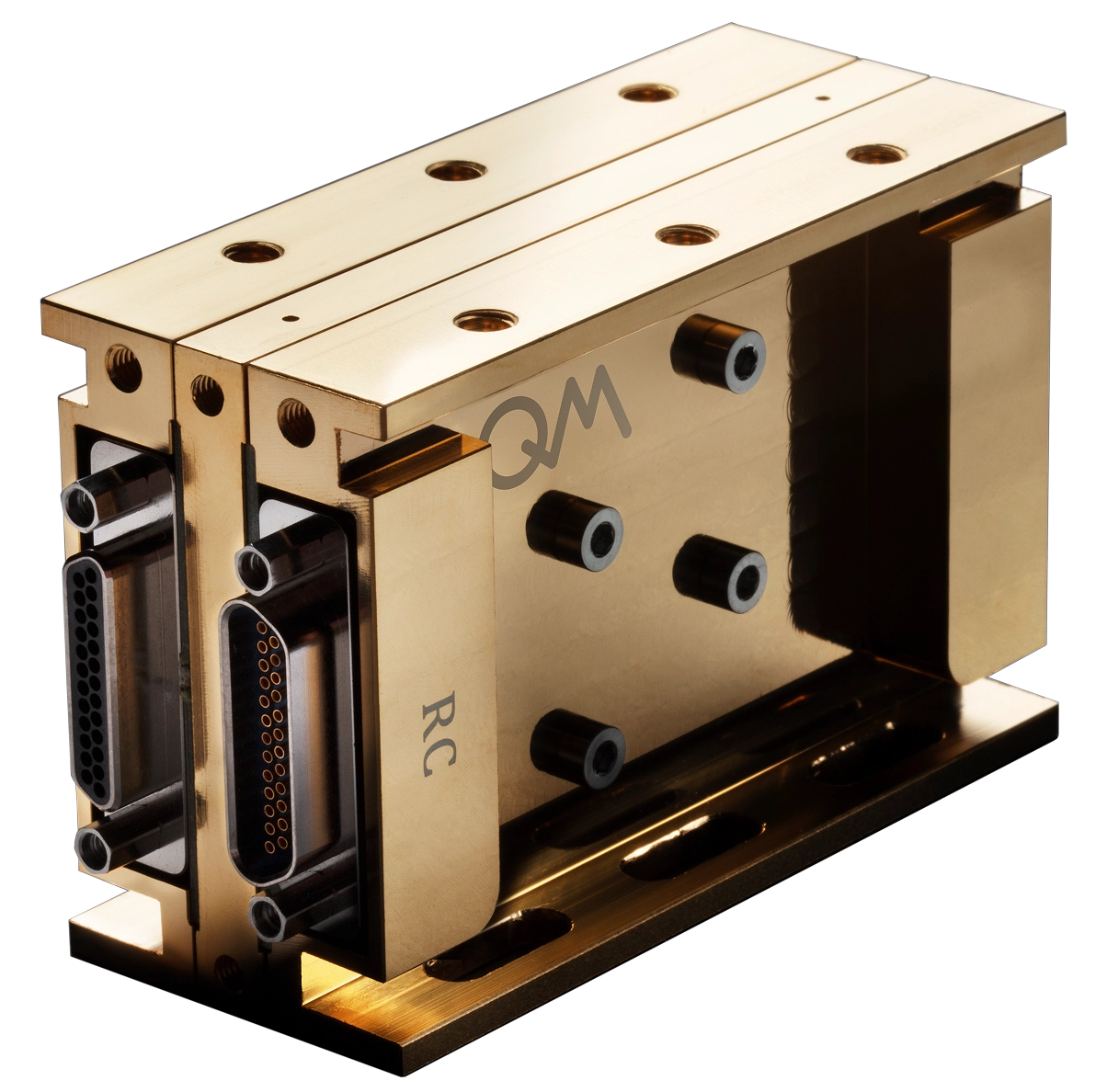
At millikelvin temperatures, ensuring cold electrons in signal lines is a challenge. QFilter-II addresses this by cooling electrons and filtering out electrical noise ranging from about 65 kHz to tens of GHz. Constructed from gold-coated high-conductivity copper and mountable on your cryostat’s mixing chamber plate, it is a key component for any cryogenic setup.
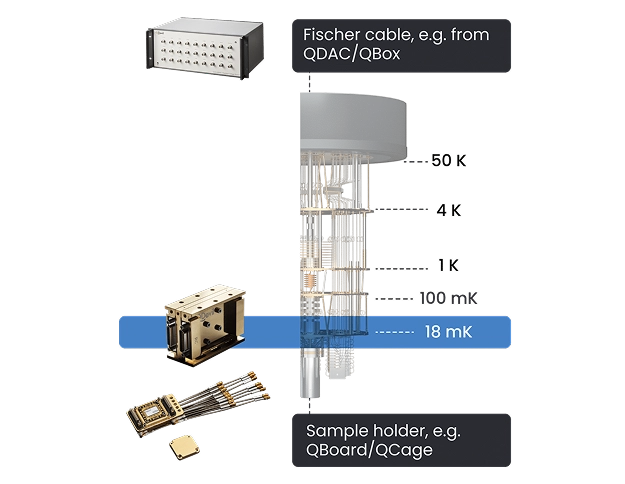
24 Line Filter Configuration with Optimal Performance
Conduct a wide range of experiments with improved signal integrity and reduced noise. The upgraded design with 16 high-density RF and 48 low-frequency RC lines enables transmission from DC to 8 GHz. A new PCB design minimizes losses and crosstalk. This is useful for applications such as readout of superconducting resonators, sub-nanosecond gate-voltage pulses, and high-bandwidth frequency sweeps.
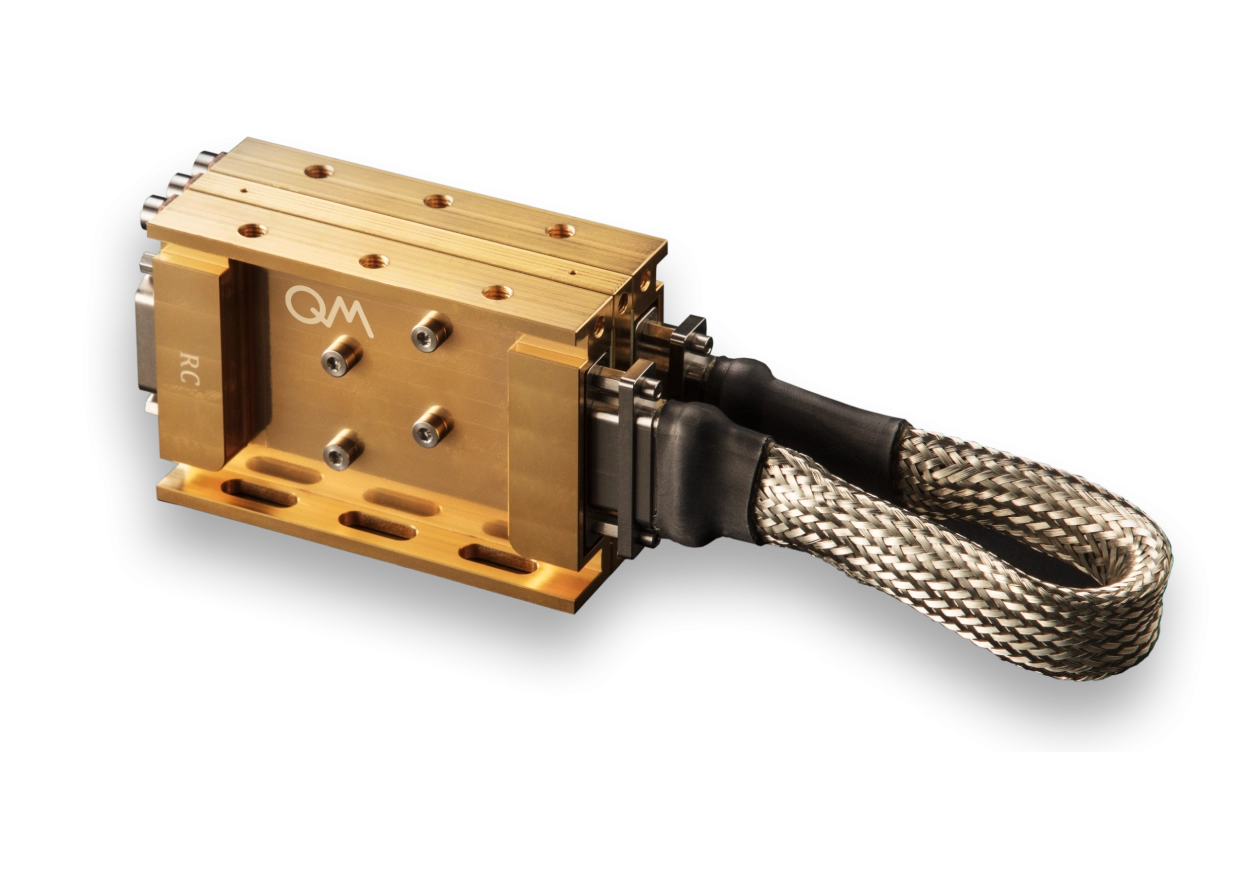
Well-Engineered Filtering Banks for Low Temperatures and High Signal Integrity
QFilter-II features two low-pass filtering banks in series: a low-frequency (65 kHz) filter with RC circuits and a high-frequency (RF, 225 MHz) filter with LC circuits. Each bank is crafted with several individually shielded filter stages. Signal lines support 150V voltages (below 4 Kelvin, max. 6mA for RC, 10mA for RF) and provide >10GΩ isolation below 4K to ground and other lines. Individual low-frequency filter lines can be shortened upon request, allowing for higher signal currents e.g. used for current biasing flux-lines.
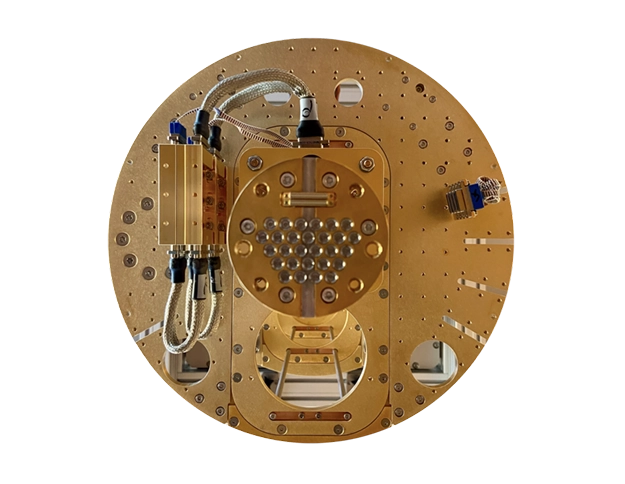
Scalability for High Channel Demands
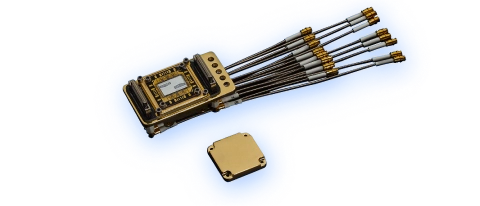
For systems requiring more than 24 lines, QFilters can be efficiently stacked (top image) saving space on the mixing chamber plate or connected in series (bottom image) removing the need for jumper cables. This flexibility allows for configurations like dual RC or dual RF filters, catering to diverse setup requirements.
Key Features
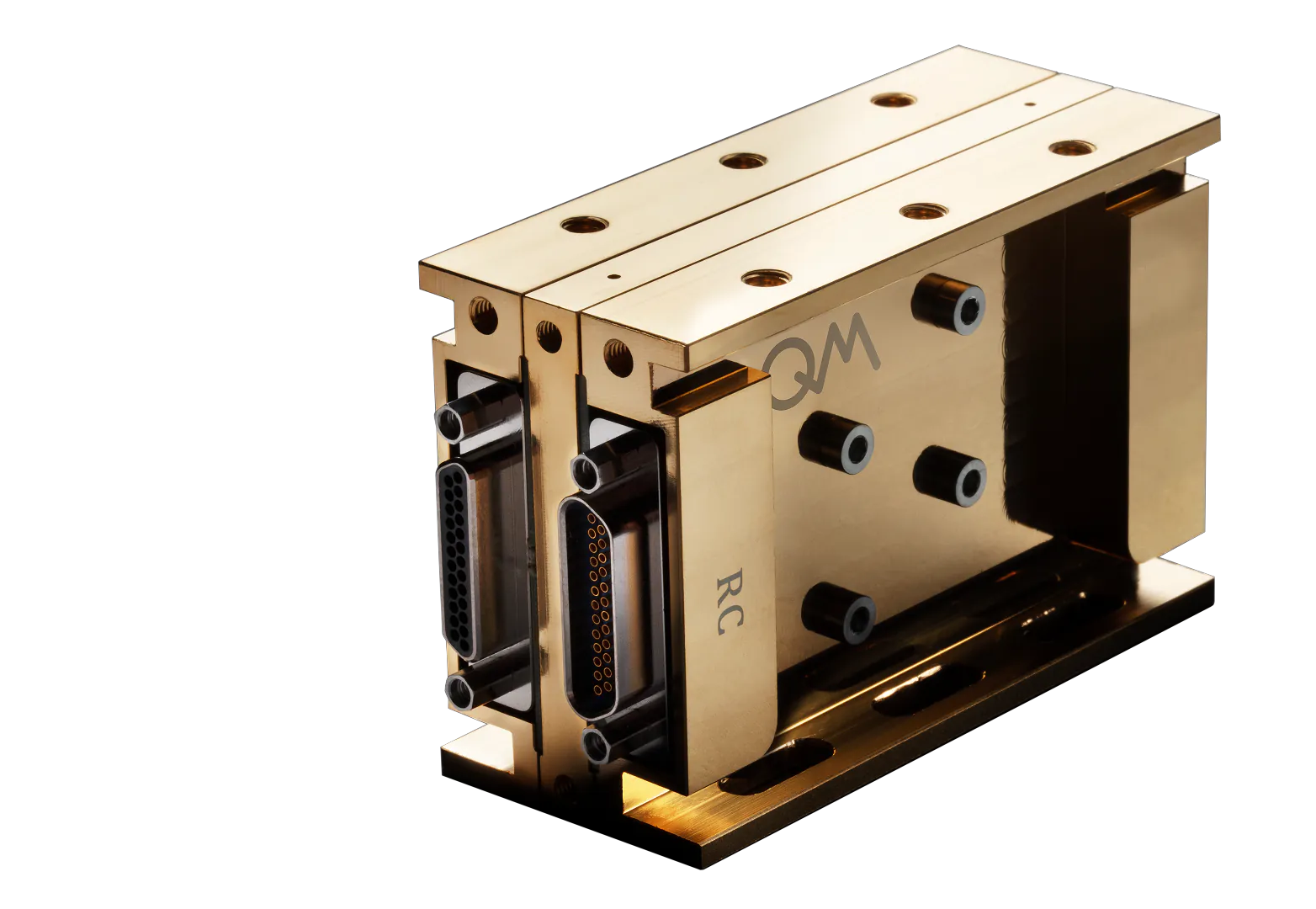
- Effective Electron Temperature Cooling: Reduces electron temperature through filtering to typically 5-15 mK above the mixing chamber.
- Advanced Low-Pass Filtering: Dual filter boards (RC and RF) with 24 channels each for strong noise rejection.
- Effortless Integration: Easily mountable on standard mixing chamber plates of dilution refrigerators with 20 mm x 20 mm pitch.
- Robust and Scalable Design: Sturdy build, suitable for stacking to accommodate higher channel counts.
- Optimal Thermal and Electrical Performance: Thermal anchoring to gold-plated copper brackets and 2GΩ isolation per channel.
- High Magnetic Field Compatibility: Non-magnetic, shielded components including titanium connectors for reliable operation in various environments.
- Connector Compatibility: Equipped with 25-pin microD connectors used in most dilution refrigerators.
- Compact and Space-Efficient: Dimensions of 30 mm x 47 mm x 70 mm for space-sensitive setups.
- Versatile Configuration: Suitable for 48, 96, or more lines, with options for stacking or in-series connections.
Advanced Microwave Solution for
Quantum Computing

Lowers Electron Temperature
QFilter effectively reduces electron temperatures to typically 5-15 mK above the mixing chamber, ideal for sensitive experiments.

Rejects Electronic Noise
QFilter including both low frequency and RF filters transmits below 65 kHz and attenuates from 10 MHz to 20 GHz by more than -60dB.

High Magnetic Field Resilience
Designed with non-magnetic, shielded components, QFilter excels in high magnetic fields, offering dependable performance.

Flexible and Scalable Design
Adaptable for filtering 48, 96, or more lines, QFilter’s scalable design meets the demands of growing research projects.