
Quantum Computing at Scale
Empowering quantum builders to control, operate, and scale quantum computers with real-time orchestration, hybrid compute integration, and enterprise-grade reliability.












INTRODUCTION
Scaling quantum computers requires more than adding qubits. Large QPUs need adaptive control, automated calibration, and tight integration with classical compute to stay performant as system complexity grows. QM’s Orchestration Platform brings real-time feedback, embedded calibration logic, and accelerator integration into one control stack. With OPX1000, the Pulse Processing Unit, QUAlibrate, and the Open Acceleration Stack, quantum teams can reduce idle time, track drift, automate retuning, and operate large-scale QPUs with the responsiveness needed for quantum error correction and high system utilization.
Scalers towards Quantum Advantage

Adaptive Control for Large-Scale QPUs
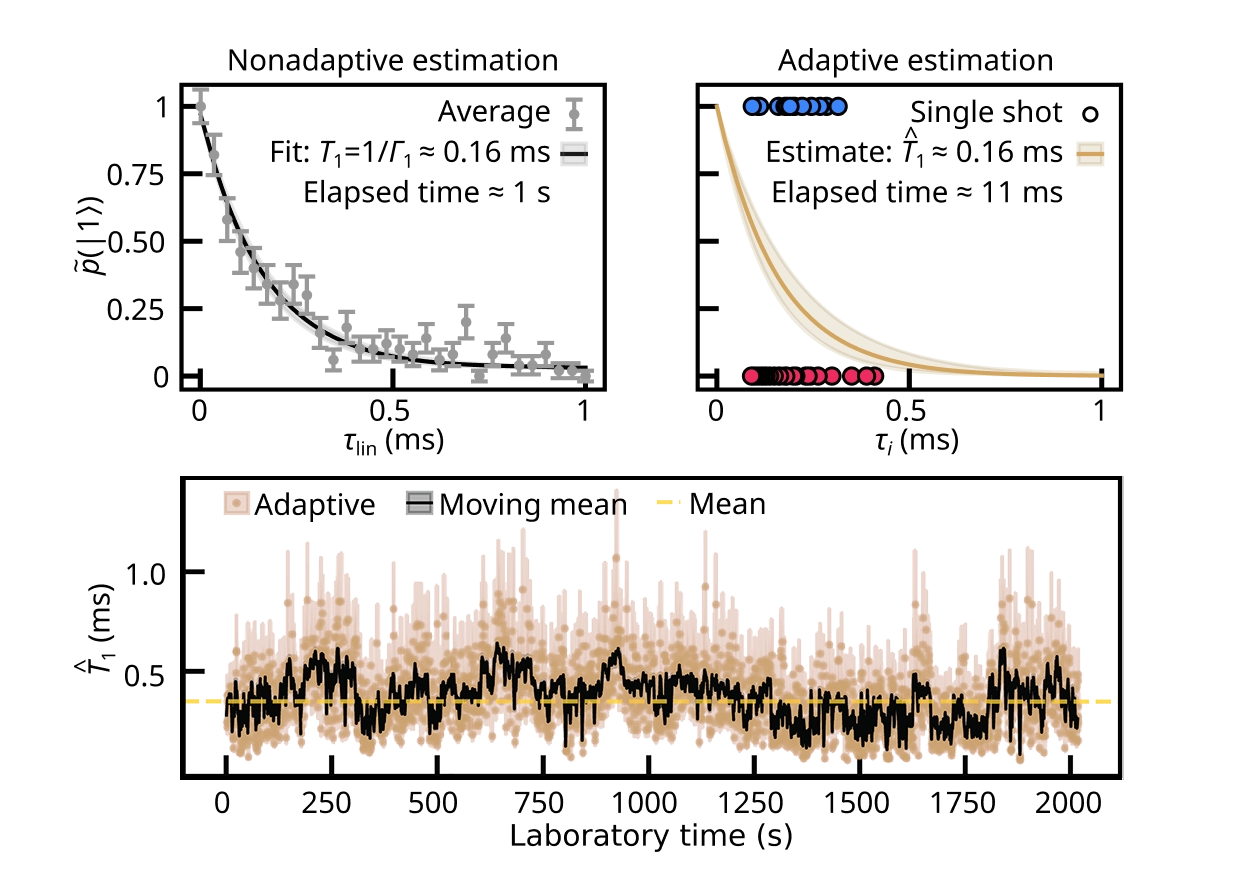
Large-scale QPUs cannot rely on static pulse sequences or offline analysis alone. To keep systems calibrated and highly utilized, the control layer must react while the experiment is running: measuring, branching, updating parameters, selecting the next pulse, and extracting the most information from every shot. QM’s embedded Pulse Processing Unit brings real-time classical computation directly into the quantum sequence, enabling low-latency feedback, feed-forward, adaptive initialization, drift handling, and embedded calibration logic. From adaptive reset to real-time Bayesian updates that accelerate T1 tracking [Berritta, F, et al. Physical Review X 16.1 (2026): 011025] or enabling millisecond-scale calibrations [Marciniak, M.A. et al. arXiv:2602.11912 (2026)], adaptive control helps large QPUs respond to changing device conditions, reduce idle time, and maintain performance as system complexity grows.
Automated Multi-Qubit & High-Fidelity Calibration
As QPUs scale, calibration must become a continuous, automated layer of operation. QUA, QM’s pulse-level language, gives teams precise control over calibration protocols at the pulse and gate level, while QM’s QUAlibrate turns those routines into automated calibration graphs with dependencies, logic, retries, loops, and parallel execution.
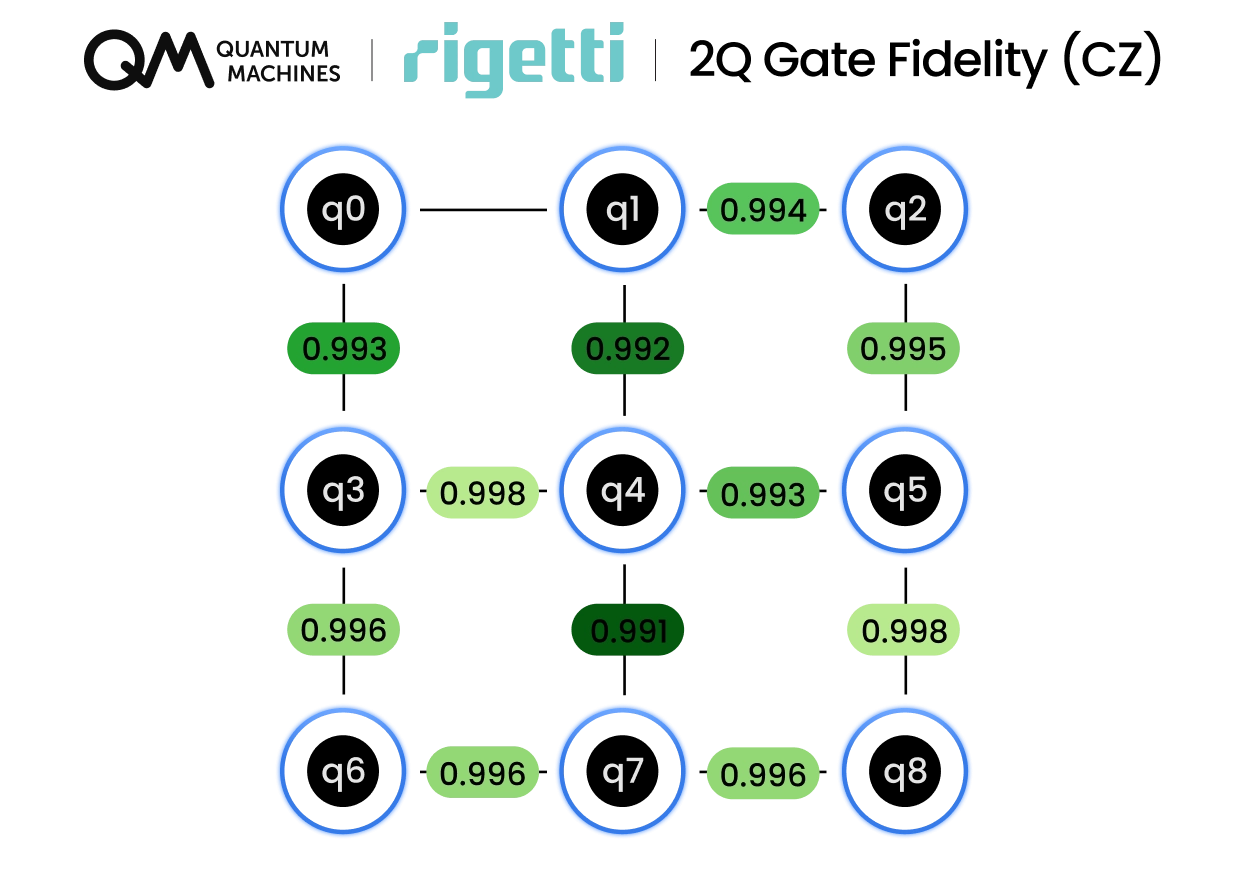
This allows full retuning of large quantum chips, including single- and two-qubit gates, to be brought down to a few minutes, fully automated and parallelized over any number of qubits. By combining real-time control, structured calibration workflows, and reusable libraries, QM helps teams reduce manual intervention, track drift, recover performance, and keep QPU utilization high.
Click below to read more about how calibrations are performed with a Rigetti Novera chip!
Integrated Classical Accelerators for Calibration and QEC
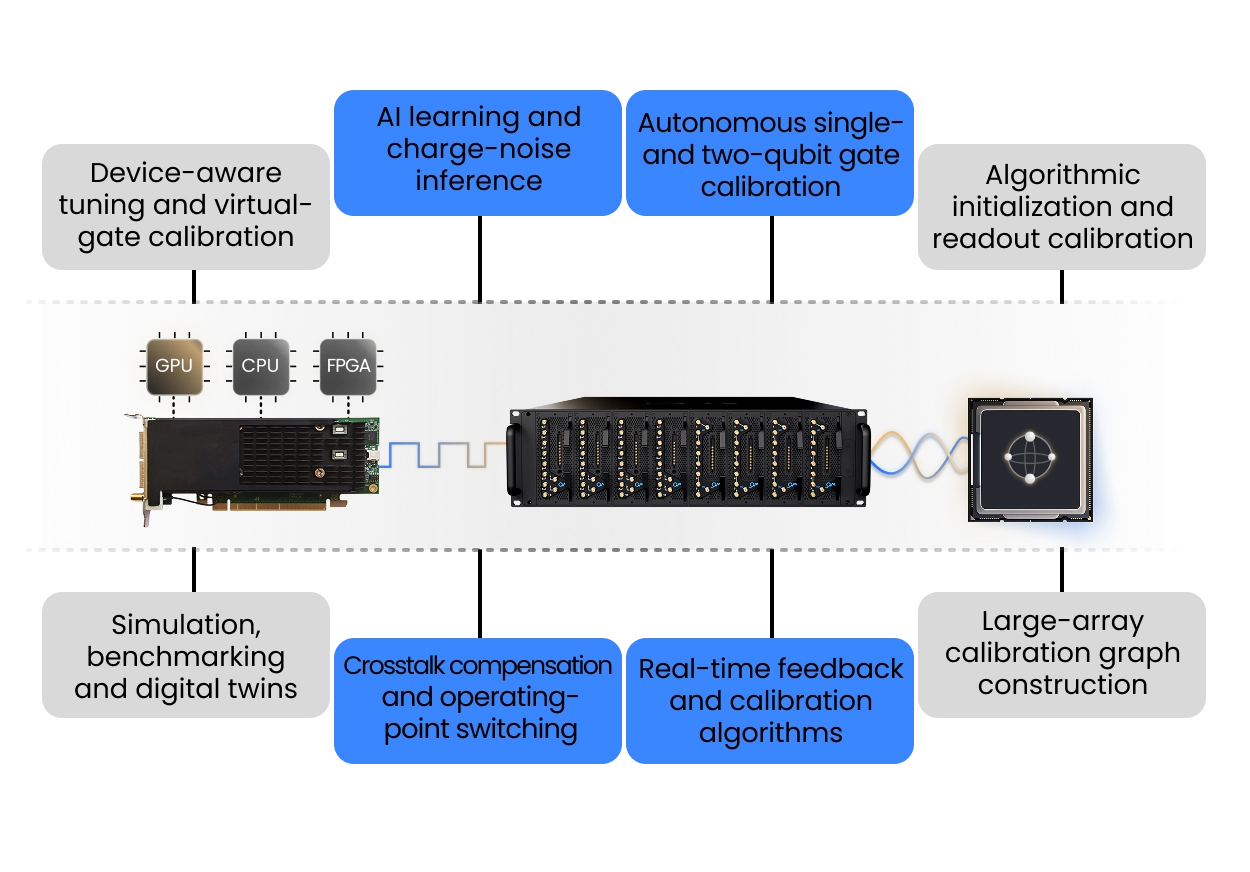
Scaling QPUs requires more than just real-time control. Advanced calibration, optimization, decoding, and QEC workflows often need heavier classical computation from dedicated CPUs, GPUs, or FPGAs, running advanced protocols or machine learning algorithms. QM’s Open Acceleration Stack connects the OPX1000 to these resources through ultra-low-latency links, allowing a quantum program to call an external accelerator, receive a result, and apply the next operation within the same shot. Simple decisions can run locally on the PPU, while compute-intensive tasks such as reinforcement-learning calibration, syndrome decoding, or decoder-dependent feed-forward can be offloaded. This creates one real-time system where quantum control and classical acceleration work together to tune, protect, and operate large-scale QPUs.



QM's control electronics provide the best real-time features along with an intuitive and well-documented programming interface. At TII, we successfully controlled a 25-q chip and conducted multiplexed characterization of all qubits using QM’s OPX and Octave. What we appreciate most, however, is the QM’s unwavering support and commitment to helping us achieve our targets, even going so far as to send some of their best scientists when needed.

Alvaro Orgaz
Lead QC Control
Using high-fidelity rapid readout and real-time state assignment, we were able to do an active reset and generate this noiseless plot (100,000 times averaging) in 20 seconds. Without active reset (assuming 400us between sequences) it would have taken roughly an hour to get a similar quality plot.” Dr. Eunjong Kim Painter Lab, Institute for Quantum Information and Matter (IQIM), Caltech Simultaneous control and reset at scale – 10-qubit device example X180

Dr. Eunjong Kim
Researcher
Quantum Machines' OPX played a key role in our roadmap. It enabled us to get the best control electronics out there [FPGA] without having to learn how to program them. QM provides a very scalable, very easy to use and very powerful hardware, which allows us to focus on the quantum science.
Dr. Théau Peronnin
CEO & Co-Founder
FAQs
How does adaptive control keep large QPUs calibrated and highly utilized?
Large QPUs can’t rely on static sequences or offline analysis, so the embedded PPU brings real-time classical computation into the quantum sequence. This includes measuring, branching, updating parameters, and choosing the next pulse on the fly. This enables low-latency feedback, feed-forward, adaptive initialization, drift handling, and embedded calibration logic. Published examples include real-time Bayesian updates that accelerate T₁ tracking and millisecond-scale calibrations that let systems respond to changing device conditions while running.
How fast can large-scale calibration run, and how is it automated?
QUAlibrate turns calibration routines written in QUA into automated calibration graphs with dependencies, logic, retries, loops, and parallel execution. This brings full retuning of large chips down to a few minutes, fully automated and parallelized over any number of qubits. Combined with real-time control and reusable libraries, it cuts manual intervention and keeps QPU utilization high as systems scale.
How does QM integrate classical accelerators for calibration and QEC?
Through the Open Acceleration Stack, which connects hybrid controllers to external CPUs, GPUs, and FPGAs so heavy classical work runs inside the quantum runtime. QEC decoding can run on high-performance accelerators while the controller streams syndromes and feed-forward closes the loop, with controller-accelerator round-trips in the microsecond regime. The same path supports reinforcement-learning calibration and optimization, keeping decoding within the budget real-time error correction requires.
Is QM’s platform proven on real large-scale and commercial QPUs?
Yes. it’s used by leading quantum builders across modalities, with public results to back it. For example, QM has documented automated multi-qubit calibration on a Rigetti Novera chip, and the platform supports superconducting, spin, neutral-atom, and other modalities from a single control stack. That breadth is why scalers building toward quantum advantage adopt the OPX1000 rather than committing to one architecture.