Speaker
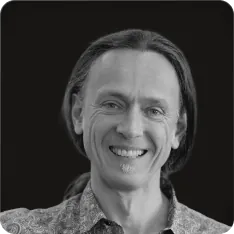
Andrea Morello
Scientia Professor, UNSW Sydney

Andrea Morello is an electrical engineer and quantum physicist, and Scientia Professor of Quantum Engineering at the University of New South Wales (UNSW) Sydney, where he is also Deputy Director of the ARC Centre of Excellence for Quantum Computation and Communication Technology (CQC2T). He obtained an M.Eng. in electronics engineering at the Politecnico di Torino (1998) and a PhD in experimental physics at the Kamerlingh Onnes Laboratory in Leiden (2004), followed by a postdoc at the University of British Columbia. He joined UNSW in 2006. Morello’s group achieved the world’s first single-shot readout of an electron spin in silicon (Nature, 2010) and the first single-atom electron spin qubit in silicon (Nature, 2012), and his single-atom qubits hold records for coherence time and Bell’s-inequality violation in the solid state. He is a Fellow of the American Physical Society and of the Royal Society of New South Wales, and received the 2017 Landauer and Bennett Award for Quantum Computing. He is also active in public science outreach and education.
Host

Lorenzo Leandro
Product Solutions Physicist

Lorenzo has a Ph.D. in Quantum Optics, which mostly means he fixed cryostats for 3 years with a forced smile on his face.
He cultivates his passions for Quantum Technologies and communicating science by taking care of the scientific content at Quantum Machines, while secretly devoting time to fight his archenemy: stairs.
Description
Quantum computers are usually made of qubits, i.e. two-dimensional quantum systems. In practice, fault-tolerant quantum computation requires entangling multiple physical qubits into an error-correctable logical qubit. Therefore, a logical qubit is necessarily a high-dimensional quantum object, even though it encodes a single bit of quantum information.
In this talk, Prof. Andrea Morello will discuss how his team encodes quantum information in a natively high-dimensional object, without the need for entangling multiple physical qubits. They use the nuclear spin of an antimony atom, which has a spin I=7/2, and thus an 8-dimensional Hilbert space. The antimony atom is a group-V donor in silicon, and can be incorporated in a silicon nanoelectronic device via ion implantation. The antimony nucleus can encode “Schrödinger cat” states, which act as the logical codewords. The encoding process itself makes use of a generalized rotating frame, which is enabled by the development of modern FPGA signal generators such as the Quantum Machines OPX. This infrastructure is the basis for a new generation of resource-efficient quantum computer hardware.