
Have a specific experiment in mind and wondering about the best quantum control and electronics setup?

Want to see what our quantum control and cryogenic electronics solutions can do for your qubits?
Live seminar
22 Apr 2026
18:00:00
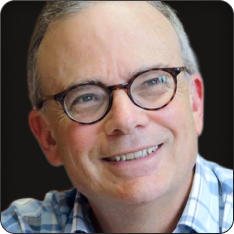
Prof. David DiVincenzo
Theoretical Physicist and Pioneer of Quantum Information Science

There was hope for some years that a successful quantum computer could be built with fixed-coupling arrays of transmons. A few years ago, the big players (Google, then IBM) switched to tunable-coupler arrays, despite the 3x growth of size of the control system. Why pay such a big price? The answer is that there was a grave danger that the fixed-coupling chips would never work – that they would never permit the precision control required to run a quantum algorithm. I will show that there was good reason for this fear: the coupled transmon array is a non-integrable quantum system and is susceptible to quantum chaos. We showed that IBM was able to circumvent the effects of this chaos with another quantum effect, many body localization – but not well enough. I will explain some of the theory behind all this.
Share it with others
Theoretical Physicist and Pioneer of Quantum Information Science
Bio
David DiVincenzo is a leading theoretical physicist in quantum information science, known for formulating the DiVincenzo criteria for building quantum computers. He is a professor at RWTH Aachen University and a director at Forschungszentrum Jülich, with previous roles at IBM Research. His work has been foundational in quantum error correction, quantum architectures, and the theory of quantum computation.

Communications director

Bio
Katia Moskvitch is the Director of Communications at Quantum Machines, where she leads the company’s global communications strategy, brand narrative, and external relations across media, analysts, partners, and the broader quantum technology ecosystem. She oversees strategic content development, thought leadership initiatives, and the company’s public positioning.
Katia is an award-winning science and technology journalist with more than 15 years of experience writing for Nature, BBC Future, New Scientist, Wired, Scientific American, and Quanta Magazine. Before joining Quantum Machines, she led editorial strategy and communications for several deep-tech and advanced research organizations, translating complex scientific innovation into clear narratives for global audiences.
Her journalistic work has spanned quantum computing, physics, space science, AI, cybersecurity, and emerging technologies, and her reporting has been featured in leading publications worldwide. Katia is also the author of Neutron Stars: The Quest to Understand the Zombies of the Cosmos, a nonfiction book blending science, history, and human relationships.
Live seminar
22 Apr 2026
18:00:00
Have a specific experiment in mind and wondering about the best quantum control and electronics setup?
Want to see what our quantum control and cryogenic electronics solutions can do for your qubits?