Quantum Machines’ Latest Acquisition Highlights Europe’s Growing Quantum Talent Base
As fault-tolerant quantum computing moves closer to reality, demand for quantum engineering talent, quantum control systems expertise and advanced hardware development is accelerating across Europe.
Quantum computing is approaching a critical stage of development. As the industry moves beyond laboratory demonstrations and toward commercially useful systems, companies are increasingly focused on a challenge that extends far beyond qubits: finding the talent needed to build, scale and deploy quantum computers.
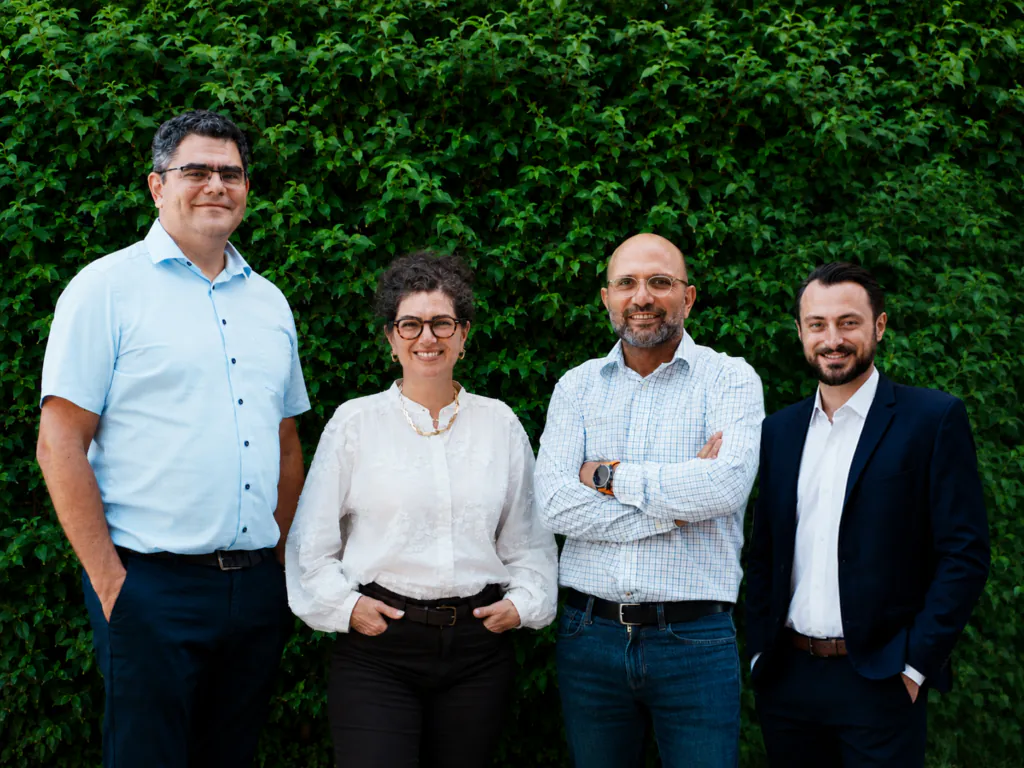
That reality is reflected in Quantum Machines’ latest acquisition, of Hungarian engineering company PCB Engineering. The deal follows our recent acquisition of Dutch spin-out QHarbor and establishes a new R&D hub in Budapest, further expanding QM’s European footprint. The move comes as global investment in quantum computing continues to accelerate. Governments, hyperscalers, startups and research institutions are collectively investing billions of dollars in the race to build fault-tolerant quantum computers capable of solving problems beyond the reach of classical systems.
Yet as the technology matures, the industry’s priorities are evolving. “We are starting to see the conversation shift towards productization,” said Quantum Machines’ CTO Yonatan Cohen. “We are starting to have end users, and it really forces the entire industry to mature.”
That shift is creating demand for a broader set of skills than quantum computing traditionally required. While breakthroughs in physics remain essential, the next phase of development depends equally on hardware engineering, systems architecture, software development and manufacturing expertise. Building useful quantum computers requires integrating highly complex components into reliable systems that can be reproduced and scaled. It also requires infrastructure capable of supporting different qubit modalities and increasingly sophisticated hybrid quantum-classical workflows.
According to Cohen, the industry’s challenge is no longer simply to increase qubit counts. “It’s a combination of having good qubits, being able to scale the number of qubits, but being able to scale them while keeping the quality,” he said.
That challenge is helping elevate the importance of engineering talent across the quantum ecosystem. Europe has emerged as one of the world’s most important sources of that talent. The continent’s universities, research institutes and deep-tech companies have produced a generation of physicists, engineers and computer scientists who are helping shape the future of quantum technologies. Increasingly, quantum companies are competing not only for scientific breakthroughs but also for the expertise needed to transform those breakthroughs into products.
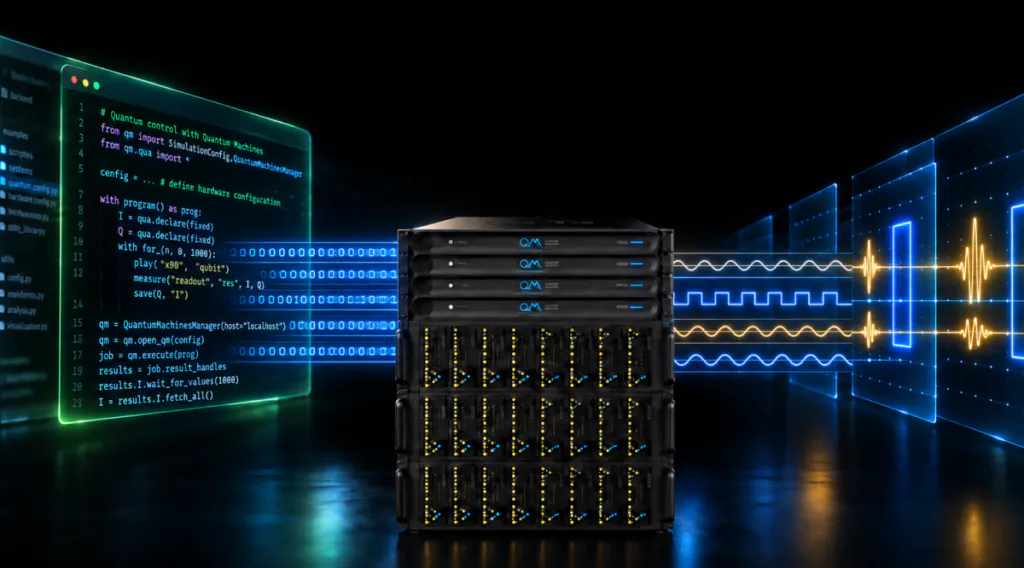
We at Quantum Machines now employ people across 22 countries, with major offices spanning Europe, North America, Asia and the Middle East. The addition of PCB Engineering strengthens our capabilities in advanced hardware design and high-performance electronic systems, both of which play an increasingly important role as quantum computers grow in scale and complexity. The acquisition also reflects a broader trend across the industry. As quantum computing edges closer to real-world applications, companies are investing heavily in the infrastructure that surrounds the quantum processor itself. Control systems, software orchestration, electronics and systems integration are becoming critical areas of innovation.
Quantum Machines CEO Itamar Sivan believes quantum computing is approaching an important inflection point, with unprecedented impact being just around the corner. To get there, we have built the industry’s biggest quantum control team and are now deploying the biggest investments in quantum control, by far.
As the industry transitions from research to deployment, the demand for highly skilled engineers and scientists is expected to grow significantly. The race to quantum advantage may be driven by advances in hardware and algorithms, but delivering useful quantum computers at scale will ultimately depend on the people capable of building them. As a result, talent is becoming one of the most important competitive advantages in quantum computing – and one of Europe’s greatest strengths.