Description
Superconducting integrated circuits are a leading platform for realizing a utility-scale quantum computer. Continued progress requires a thorough understanding of qubit decoherence, which is largely limited by two-level state (TLS) defects at material interfaces. In this talk, we present a systematic study of energy relaxation in frequency-tunable transmon qubits. We measure spectral and temporal fluctuations of relaxation time in qubits of different geometries, varying both the junction lead shape and the distance between the shunt capacitor electrodes. Our results are consistent with a model where energy relaxation is dominated by defects at the substrate-air interface. With detailed Monte Carlo simulations we are able to localize the dominant defects to within 500 nm of the Josephson junction, where organic residues from fabrication are present. These results motivate a focus on new methods of fabricating junctions that do not involve liftoff.
Speaker
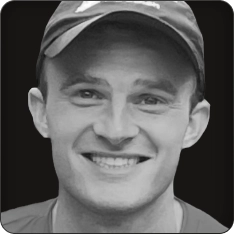
Spencer Clark Weeden
PhD candidate

Spencer Weeden is a graduate student in Robert McDermott’s lab at UW-Madison. He is from Stoughton, WI, and previously attended Carleton College for his bachelor’s degree in physics. His research involves characterizing and mitigating decoherence in transmon qubits, both from two-level state defects and other spurious decoherence channels.
Host
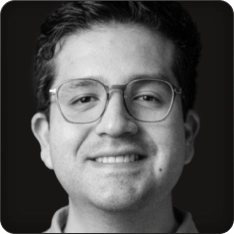
Kevin Villegas Rosales
Customer Success Team Lead

Kevin Villegas is a Customer Success Team Lead at Quantum Machines. He helps labs worldwide implement pulse-level control sequences, and has worked with tens of labs to set up their control devices and trained hundreds of physicists along the way. Previously, he conducted Ph.D. research in Physics at Princeton University, studying electron ordering in ultra-clean GaAs 2D systems with ultra-low-noise measurements and dilution-refrigerator cryogenics, contributing to multiple publications. Kevin also co-directed the REPU program, leading admissions and mentoring initiatives that placed Peruvian undergraduates in top research groups. His interests include scalable calibration workflows, feedback and feed-forward control, and bringing the gap between academic-based quantum devices and quantum utility.