Advanced characterization techniques for superconducting qubit fabrication research
Speaker
Kan-Heng Lee
Research Scientist, Quantum Information Science and Technology Group at Lawrence Berkeley National Laboratory

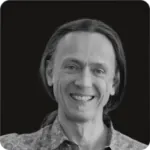
Kan-Heng Lee is a Research Scientist in the Quantum Information Science & Technology (QuIST) group at Lawrence Berkeley National Laboratory, where he serves as lead PI of the Quantum Integrated Circuit Engineering effort. His research focuses on understanding the device physics of superconducting quantum processing units (QPUs) and translating that understanding into engineering solutions that improve their capabilities and performance. Spanning materials science and quantum circuit design, his current work centers on two directions: (1) developing new methods to reveal previously unknown or understudied aspects of loss in superconducting circuits, and (2) building hardware-efficient, application-focused superconducting quantum circuits that explore new ways to encode and process quantum information.

Ambrose Yang
Ambrose Yang, Graduate Student, Houck Lab, Princeton University

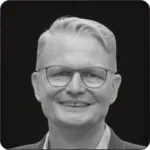
Ambrose Yang is a 3rd-year PhD student in Electrical and Computer Engineering at Princeton University, where he is advised by Prof. Andrew Houck and Prof. Nathalie de Leon. His research is focused on materials and devices towards developing high-coherence, high-stability superconducting qubits and high-fidelity gates. He is the recipient of the Pramod Subramanyan *17 Early Career Graduate Award at Princeton and received a B.S. in electrical engineering and computer science from Cornell University.

Alec Emser
Alec Emser, Technical Staff member in the Quantum-Enabled Computation group at MIT Lincoln Laboratory

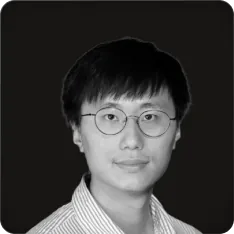
Alec Emser completed his undergraduate studies at Yale before moving to Boulder, Colorado, where he earned his PhD in the field of circuit quantum acoustics as a member of Konrad Lehnert’s group at JILA. Now at MIT Lincoln Laboratory, his work focuses on developing new experimental techniques to accelerate the benchmarking of superconducting qubits. He is particularly interested in characterizing the deleterious and ever-fluctuating ensembles of two-level system defects that predominantly limit qubit performance today.

Akshay Murthy
Akshay Murthy, Scientist & Group Leader at Fermilab

Akshay Murthy is a scientist and group leader at Fermilab, where he also serves as deputy director of the Superconducting Quantum Materials and Systems (SQMS) Center and leads its materials characterization efforts. His research group applies a wide range of materials characterization techniques, including electron microscopy and time-of-flight secondary ion mass spectrometry, to identify sources of decoherence in superconducting qubits and to understand charge transport in cryogenic electronics. The goal is to improve the quality and performance of these devices.
Host

Michaela Eichinger
Product Solutions Physicist

Michaela Eichinger is an experimental physicist working on both product and commercial side of quantum computing. She has a PhD from the Niels Bohr Institute in Copenhagen, where she designed, fabricated, and characterized superconducting qubits and circuits. At Quantum Machines, Michaela work as a Product Solutions Physicist, working closely with customers and partners, analyse where the market is going, and take that back to the product team. On the product side: features, roadmap, competitive analysis, technical evaluations. On the commercial side: technical sales, strategic accounts, tenders, demos, customer strategy.
Description
Material defects remain one of the main limits on the coherence, stability, and reproducibility of superconducting qubits. Reducing them requires characterization methods that link fabrication choices to device performance, from the atomic structure of a film to the real-time behavior of a single defect.
In this online symposium on advanced characterization techniques for superconducting qubit fabrication research, four researchers from leading institutions present complementary approaches to this challenge: materials characterization of oxides, metal films, and substrates and how they connect to microwave loss; real-time tracking of fluctuations in qubit relaxation and dephasing caused by two-level system (TLS) defects; in-situ electrical control of TLS defects as a tool for error mitigation; and accelerated T1 characterization using time-modulated ac-Stark shifts.
The symposium takes 1 hour 45 minutes, including a live panel and Q&A.
Hosted by Michaela Eichinger, Product Solutions Physicist at Quantum Machines.