Real-time adaptive estimation and mitigation of decoherence in superconducting qubits
Description
Quantum computing relies on developing quantum devices that are robust against small and uncontrolled parameter variations in the Hamiltonian. We focus on real-time closed-loop feedback protocols for fast estimation of stochastic fluctuations of superconducting qubit Hamiltonian and decoherence parameters [1, 2].
We present adaptive Bayesian schemes for efficiently tracking frequency [3] and relaxation times [4] fluctuations in superconducting qubits. In real time, we implement the Bayesian algorithm to estimate low-frequency magnetic flux noise in a flux-tunable transmon qubit, achieving exponential scaling in calibration precision with the number of measurements [3], up to the limit imposed by decoherence. The algorithm is validated by improved coherence and single-qubit gate fidelity through feed-forward of the updated qubit frequency.
We also perform fast estimation of relaxation times averaging 0.17 ms and occasionally exceeding 0.5 ms in only a few milliseconds [4], more than two orders of magnitude faster than previous nonadaptive methods. We observe telegraphic relaxation time fluctuations up to 10 Hz, four orders of magnitude faster than previously measured.
These works emphasize the need for online Hamiltonian learning to enhance the performance and stability of quantum devices affected by quasistatic noise, and to quickly identify the lowest-performing qubit outliers in quantum processing units.
Speaker
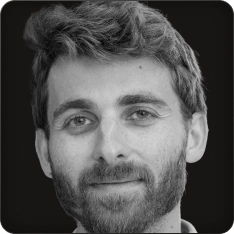
Dr. Fabrizio Berritta
Postdoctoral Fellow

Dr. Fabrizio Berritta is a physicist and Postdoctoral Associate at the Massachusetts Institute of Technology (MIT), working in the Research Laboratory of Electronics with the Engineering Quantum Systems group. His research focuses on quantum control, adaptive calibration, and error-mitigation techniques for quantum hardware. He received his Ph.D. in condensed matter physics from the Niels Bohr Institute at the University of Copenhagen.
Host
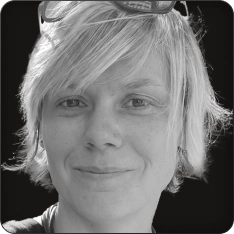
Katia Moskvitch
Communications director

Katia Moskvitch is the Director of Communications at Quantum Machines, where she leads the company’s global communications strategy, brand narrative, and external relations across media, analysts, partners, and the broader quantum technology ecosystem. She oversees strategic content development, thought leadership initiatives, and the company’s public positioning.
Katia is an award-winning science and technology journalist with more than 15 years of experience writing for Nature, BBC Future, New Scientist, Wired, Scientific American, and Quanta Magazine. Before joining Quantum Machines, she led editorial strategy and communications for several deep-tech and advanced research organizations, translating complex scientific innovation into clear narratives for global audiences.
Her journalistic work has spanned quantum computing, physics, space science, AI, cybersecurity, and emerging technologies, and her reporting has been featured in leading publications worldwide. Katia is also the author of Neutron Stars: The Quest to Understand the Zombies of the Cosmos, a nonfiction book blending science, history, and human relationships.